Thinkers of the Classical Antiquity

Phaedrus (fabulist)
137 BCE – 69 BCE
Philosophyquotes
Gaius Julius Phaedrus or Phaeder was a 1st-century AD Roman fabulist and the first versifier of a collection of Aesop's fables into Latin. Nothing is recorded of his life except for what can be inferred from his poems, and there was little mention of his work during late antiquity. It was not until the discovery of a few imperfect manuscripts during and following the Renaissance that his importance emerged, both as an author and in the transmission of the fables.
He who covets what belongs to another deservedly loses his own.

Julius Caesar
100 BCE – 44 BCE
Politicsquotes
Gaius Julius Caesar was a Roman general and statesman who was the dictator of the Roman Republic almost continuously from 49 BC until his assassination in 44 BC. A member of the First Triumvirate, he led the Roman armies through the Gallic Wars and defeated his political rival Pompey in Caesar’s civil war. He consolidated power and proclaimed himself dictator perpetuo in 44 BC, which contributed to the political conditions that led to the collapse of the Roman Republic and the emergence of the Roman Empire.
C. Julius Caesar Jona Lendering's in‑depth history of Caesar

Sulla
137 BCE – 77 BCE
Politicsquotes
Lucius Cornelius Sulla Felix, commonly known as Sulla, was a Roman general and statesman of the late Roman Republic. Coming to fame for his military exploits, he was the first general during the late republic to march on Rome and win a civil war. After purging his opponents, he assumed the dictatorship, sought to strengthen the republican system by means of reforms to the constitution, and resigned his plenary powers after their enactment.
He ought to have worked at the oar before steering the vessel.
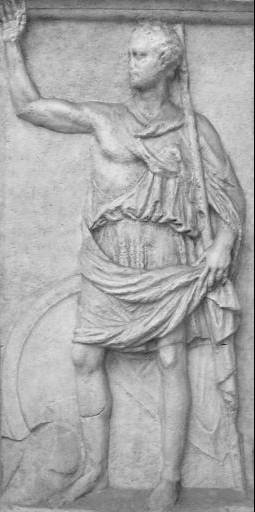
Polybius
200 BCE – 120 BCE
Historyquotes
Polybius was an ancient Greek historian of the middle Hellenistic period. He is noted for his Histories, a universal history documenting the rise of Rome in the Mediterranean in the third and second centuries BC. It covers the period 264–146, recording in detail events in Italy, Iberia, Greece, Macedonia, Syria, Egypt and Africa, and documents the Punic Wars and Macedonian Wars among many others.
The only method of learning to bear with dignity the vicissitudes of fortune is to recall the catastrophes of others.
Kanada (philosopher)
200 BCE – 160 BCE
Philosophyquotes

Hillel the Elder
100 BCE – 100
Religionquotes
A name made great is a name destroyed. He who does not increase his knowledge decreases it.

Cicero
106 BCE – 43 BCE
Politicsquotes
Marcus Tullius Cicero was a Roman statesman, lawyer, scholar, philosopher, orator, writer and Academic skeptic, who tried to uphold optimate principles during the political crises that led to the establishment of the Roman Empire. His extensive writings include treatises on rhetoric, philosophy and politics. He is considered one of Rome's greatest orators and prose stylists and the innovator of what became known as "Ciceronian rhetoric".
Dryden's translation of Cicero from Plutarch's Parallel Lives

Pompey
105 BCE – 47 BCE
Politicsquotes
Gnaeus Pompeius Magnus, known in English as Pompey or Pompey the Great, was a Roman general and statesman who was prominent in the last decades of the Roman Republic. As a young man, he was a partisan and protégé of the dictator Sulla, after whose death he achieved much military and political success himself.
Words from December 1
"He who covets what belongs to another deservedly loses his own."
Phaedrus (fabulist)
137 BCE
"Every one is bound to bear patiently the results of his own example."
Phaedrus (fabulist)
137 BCE
"C. Julius Caesar Jona Lendering's in‑depth history of Caesar"
Julius Caesar
100 BCE
"The Heart of Change: Julius Caesar and the End of the Roman Republic"
Julius Caesar
100 BCE
"He ought to have worked at the oar before steering the vessel."
Sulla
137 BCE
"I forgive the many for the sake of the few, the living for the dead."
Sulla
137 BCE