Thinkers of the Classical Antiquity

Ennius
238 BCE – 168 BCE
Literaturequotes
Quintus Ennius was a writer and poet who lived during the Roman Republic. He is often considered the father of Roman poetry. He was born in the small town of Rudiae, located near modern Lecce, a town founded by the Messapians, and could speak Greek as well as Latin and Oscan.
Noctes Atticae by Gellius in Latin, with Books I-XIII in English

Terence
184 BCE – 158 BCE
Literaturequotes
Publius Terentius Afer, better known in English as Terence, was a playwright during the Roman Republic. He was the author of six comedies based on Greek originals by Menander or Apollodorus of Carystus. All six of Terence's plays survive complete and were originally produced between 166–160 BC.
I only wish I may see your head stroked down with a slipper.
Cato the Elder
234 BCE – 149 BCE
quotes
The best way to keep good acts in memory is to refresh them with new.
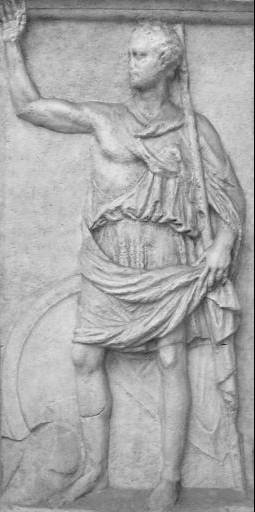
Polybius
200 BCE – 120 BCE
Historyquotes
Polybius was an ancient Greek historian of the middle Hellenistic period. He is noted for his Histories, a universal history documenting the rise of Rome in the Mediterranean in the third and second centuries BC. It covers the period 264–146, recording in detail events in Italy, Iberia, Greece, Macedonia, Syria, Egypt and Africa, and documents the Punic Wars and Macedonian Wars among many others.

Plautus
249 BCE – 183 BCE
Literaturequotes
The chap that endures hard knocks like a man enjoys a soft time later on.
Kanada (philosopher)
200 BCE – 160 BCE
Philosophyquotes

Hannibal
246 BCE – 182 BCE
Politicsquotes
Hannibal was a Carthaginian general and statesman who commanded the forces of Carthage in their battle against the Roman Republic during the Second Punic War. Hannibal lived during a period of great tension in the Mediterranean Basin, triggered by the emergence of the Roman Republic as a great power with its defeat of Carthage in the First Punic War. Revanchism prevailed in Carthage, symbolized by the pledge that Hannibal made to his father to "never be a friend of Rome".
I have come not to make war on the Italians, but to aid the Italians against Rome.

Scipio Africanus
234 BCE – 182 BCE
Politicsquotes
Publius Cornelius Scipio Africanus was a Roman general and statesman who was one of the main architects of Rome's victory against Carthage in the Second Punic War. Often regarded as one of the greatest military commanders and strategists of all time, his greatest military achievement was the defeat of Hannibal at the Battle of Zama in 202 BC. This victory in Africa earned him the honorific epithet Africanus, literally meaning 'the African', but meant to be understood as a conqueror of Africa.
Words from January 9
"Noctes Atticae by Gellius in Latin, with Books I-XIII in English"
Ennius
238 BCE
"I only wish I may see your head stroked down with a slipper."
Terence
184 BCE
"This and a great deal more like it I have had to put up with."
Terence
184 BCE
"The best way to keep good acts in memory is to refresh them with new."
Cato the Elder
234 BCE
"I would much rather have men ask why I have no statue, than why I have one."
Cato the Elder
234 BCE
"The chap that endures hard knocks like a man enjoys a soft time later on."
Plautus
249 BCE