Thinkers of the Classical Antiquity

Archimedes
286 BCE – 211 BCE
Sciencequotes
Archimedes of Syracuse was an Ancient Greek mathematician, physicist, engineer, astronomer, and inventor from the city of Syracuse in Sicily. Although few details of his life are known, based on his surviving work, he is considered one of the leading scientists in classical antiquity, and one of the greatest mathematicians of all time. Archimedes anticipated modern calculus and analysis by applying the concept of the infinitesimals and the method of exhaustion to derive and rigorously prove many geometrical theorems, including the area of a circle, the surface area and volume of a sphere, the area of an ellipse, the area under a parabola, the volume of a segment of a paraboloid of revolution, the volume of a segment of a hyperboloid of revolution, and the area of a spiral.
Archimedes and the Rhombicuboctahedron" by Antonio Gutierrez

Ennius
238 BCE – 168 BCE
Literaturequotes
Quintus Ennius was a writer and poet who lived during the Roman Republic. He is often considered the father of Roman poetry. He was born in the small town of Rudiae, located near modern Lecce, a town founded by the Messapians, and could speak Greek as well as Latin and Oscan.
Noctes Atticae by Gellius in Latin, with Books I-XIII in English
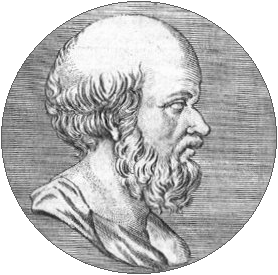
Eratosthenes
276 BCE – 194 BCE
Mathematicsquotes
Eratosthenes of Cyrene was an Ancient Greek polymath: a philosopher, scholar, mathematician, geographer, poet, astronomer, and music theorist. Eratosthenes eventually became the chief librarian at the Library of Alexandria. His work was the precursor to the modern discipline of geography, and he introduced some of its terminology, coining the terms geography and geographer.

Terence
184 BCE – 158 BCE
Literaturequotes
Publius Terentius Afer, better known in English as Terence, was a playwright during the Roman Republic. He was the author of six comedies based on Greek originals by Menander or Apollodorus of Carystus. All six of Terence's plays survive complete and were originally produced between 166–160 BC.
I only wish I may see your head stroked down with a slipper.
Cato the Elder
234 BCE – 149 BCE
quotes
The best way to keep good acts in memory is to refresh them with new.

Han Fei
280 BCE – 233 BCE
Philosophyquotes
Han Fei, also known as Han Feizi, was a Chinese Legalist philosopher and statesman during the Warring States period. He was a prince of the state of Han.
The Law is Huge and Shapeless, its Moral is extends everywhere.
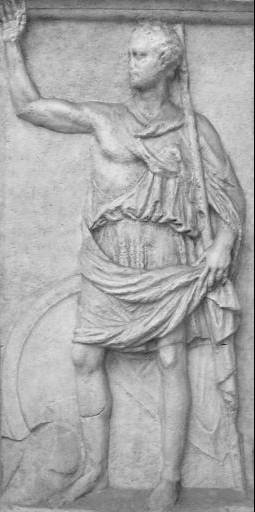
Polybius
200 BCE – 120 BCE
Historyquotes
Polybius was an ancient Greek historian of the middle Hellenistic period. He is noted for his Histories, a universal history documenting the rise of Rome in the Mediterranean in the third and second centuries BC. It covers the period 264–146, recording in detail events in Italy, Iberia, Greece, Macedonia, Syria, Egypt and Africa, and documents the Punic Wars and Macedonian Wars among many others.

Apollonius of Rhodes
294 BCE – 214 BCE
Literaturequotes
Apollonius of Rhodes was an ancient Greek author, best known for the Argonautica, an epic poem about Jason and the Argonauts and their quest for the Golden Fleece. The poem is one of the few extant examples of the epic genre and it was both innovative and influential, providing Ptolemaic Egypt with a "cultural mnemonic" or national "archive of images", and offering the Latin poets Virgil and Gaius Valerius Flaccus a model for their own epics. His other poems, which survive only in small fragments, concerned the beginnings or foundations of cities, such as Alexandria and Cnidus, which were places of interest to the Ptolemies, whom he served as a scholar and librarian at the Library of Alexandria.
Words from September 25
"Archimedes and the Rhombicuboctahedron" by Antonio Gutierrez"
Archimedes
286 BCE
"Archimedes - The Greek mathematician and his Eureka moments" on BBC 4 ."
Archimedes
286 BCE
"Noctes Atticae by Gellius in Latin, with Books I-XIII in English"
Ennius
238 BCE
"I only wish I may see your head stroked down with a slipper."
Terence
184 BCE
"This and a great deal more like it I have had to put up with."
Terence
184 BCE
"The best way to keep good acts in memory is to refresh them with new."
Cato the Elder
234 BCE