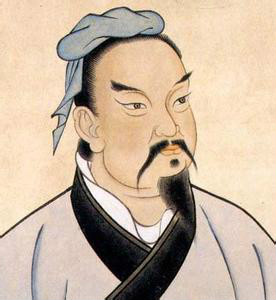
Sun Tzu
Sun Tzu was a Chinese military general, strategist, philosopher, and writer who lived during the Eastern Zhou period. Sun Tzu is traditionally credited as the author of The Art of War, a Classical Chinese text on military strategy from the Warring States period, though the earliest parts of the work probably date to at least a century after him.
Background
- Born in
- Qi
Trending & Selected Quotes
Trending topics shown first"Water shapes its course according to the nature of the ground over which it flows; the soldier works out his victory in relation to the foe whom he is facing. Therefore, just as water retains no const…"
"Engage people with what they expect; it is what they are able to discern and confirms their projections. It settles them into predictable patterns of response, occupying their minds while you wait for…"
"In war, numbers alone confer no advantage. Do not advance relying on sheer military power."
Works & Publications
No works or publications documented yet.
Timeline
-544
Born
Birth-496
Died
Death
Influenced By
Thinkers whose ideas shaped Sun's philosophy
No known influences documented.
Influenced
Thinkers whose work was shaped by Sun's ideas
No influenced thinkers documented yet.
Source Attribution
Information about Sun Tzu is sourced from curated knowledge bases and cross-referenced for accuracy. Influence relationships are scored by thematic overlap and historical plausibility.
Related Thinkers
See all →


Explore Further
Related Quotes
"Flee fro the prees, and dwelle with sothfastnesse, Suffyce unto thy good, though hit be smal; For hord hath…"
— Geoffrey Chaucer"I have changed my definition of tragedy. I now think tragedy is not foul deeds done to a person but rather …"
— Rita Mae Brown"Is not every man sometimes a radical in politics? Men are conservatives when they are least vigorous, or wh…"
— Ralph Waldo Emerson"John Barnes at Absolute Astronomy"
— John Barnes (author)"All great minds sympathize."
— Johann Kaspar Lavater"Perhaps it is impossible for a person who does no good not to do harm."
— Harriet Beecher Stowe





