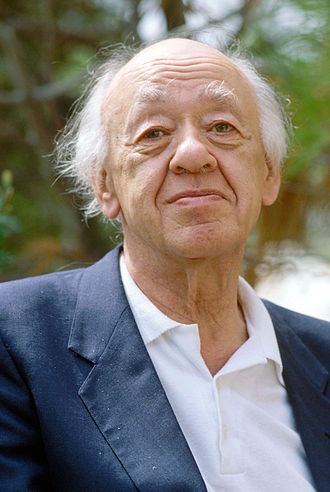
"The French Revolution liberated people from the power of the aristocrats. But the bourgeoisie that took over represented the exploitation of man by man, and had to be destroyed — as in the Russian Revolution, which then degenerated into totalitarianism, Stalinism, and genocide. The more you make revolutions, the worse it gets. Man is driven by evil instincts that are often stronger than moral laws … there is a higher order, but man can separate himself from it because he is free — which is what we have done. We have lost the sense of this higher order, and things will get worse and worse, culminating perhaps in a nuclear holocaust — the destruction predicted in the Apocalyptic texts. Only our apocalypse will be absurd and ridiculous because it will not be related to any transcendence. Modern man is a puppet, a jumping jack."
React to this quote
More by Eugène Ionesco
See allResonant Thoughts
"Let the man of learning, the man of lettered leisure, beware of that queer and cheap temptation to pose to himself and to others as a cynic, as the man who has outgrown emotions and beliefs, the man t…"
Explore Further
Related Quotes
"Sharia … is, of course, invalid because it's God's Law, and God doesn't exist."
— Pat Condell"No legislature, governor, or president has ever suggested that corporations should be considered "persons" …"
— Thom Hartmann"If one does not wish to be dissatisfied with one’s lot at home, one ought to go where the flies and the sti…"
— Anthony Burgess"I'm not the best, I'm just a guy who's willing to fight the best."
— Glen Johnson"In the old law-courts, the class minority of exploiters passed judgement upon the working majority. The law…"
— Nikolai Bukharin"Let me just tell you how thrilling it really is, and how, what a challenge it is, because in 1988 the quest…"
— Dan Quayle