#books
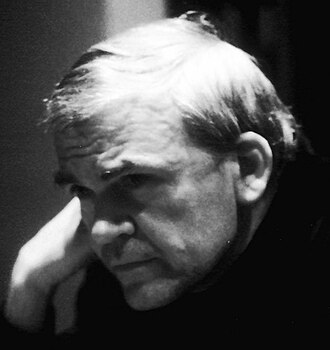
"Early in the novel , Anna meets Vronsky in curious circumstances: they are at the railway station when someone is run over by a train. At the end of the novel, Anna throws herself under a train. This symmetrical composition — the same motif appears at the beginning and the end — may seem quite “novelistic” to you, and I am willing to agree, but only on condition that you refrain from reading such notions as “fictive,” “fabricated,” and “untrue to life” into the word “novelistic.” Because human lives are composed in precisely such a fashion. They are composed like music. Guided by his sense of beauty, an individual transforms a fortuitous occurrence into a motif, which then assumes a permanent place in the composition of the individual’s life. Anna could have chosen another way to take her life. But the motif of death and the railway station, unforgettably bound to the birth of love, enticed her in her hour of despair with its dark beauty. Without realizing it, the individual composes his life according to the laws of beauty even in times of greatest distress. It is wrong, then, to chide the novel for being fascinated by mysterious coincidences. … But it is right to chide man for being blind to such coincidences in his daily life. For he thereby deprives his life of a dimension of beauty."
React to this quote
More by Milan Kundera
See allResonant Thoughts
Explore Further
Related Quotes
"In 1831 Victor Hugo had written that he already heard 'the full sound of revolution, still deep down in the…"
— Eric Hobsbawm"Jewish Virtual Library"
— Israel Zangwill"Eating and reading are two pleasures that combine admirably."
— C. S. Lewis"It would finally be much easier for me to say what I do not believe than what I do believe. This initial st…"
— Jacques Ellul"It's enough for you to do it once for a few men to remember you. But if you do it year after year, then man…"
— Ernest Hemingway"While McMurphy laughs. Rocking farther and farther backward against the cabin top, spreading his laugh out …"
— Ken Kesey





