#science

"In this chapter I shall collect those Theorems in the Differential Calculus which, depending only on the laws of combination of the symbols of differentiation, and not on the functions which are operated on by these symbols, may be proved by the method of the separation of the symbols : but as the principles of this method have not as yet found a place in the elementary works on the Calculus, I shall first state? briefly the theory on which it is founded."
quotekg

React to this quote

More by Duncan Gregory

See all

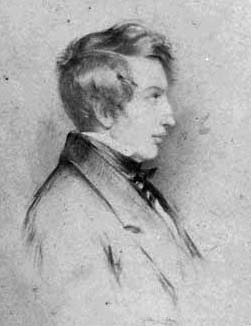
“In 1841 Gregory published his Examples of the Processes of the Differential and Integral Calculus, a work which produced a great change for the better in the Cambridge mathematical books. It is the first in which constant use is made of the method known by the name of the separation of the symbols of operation, and the author has enlivened its pages by occasionally introducing historical notices of the problems discussed... His other mathematical work was A Treatise on the Application of Analysis to Solid Geometry, which was left unfinished at his death, and was completed and published by Walton in 1845. This is the first treatise in which the system of solid geometry is developed by means of symmetrical equations, and is a great advance on those of Leroy and Hymers.”

“There are a number of theorems in ordinary algebra, which, though apparently proved to be true only for symbols representing numbers, admit of a much more extended application. Such theorems depend only on the laws of combination to which the symbols are subject, and are therefore true for all symbols, whatever their nature may be, which are subject to the same laws of combination. The laws with which we have here concern are few in number, and may be stated in the following manner. Let a, b represent two operations, u, v two subjects on which they operate, then the laws are”

“It has always appeared to me that we sacrifice many of the advantages and more of the pleasures of studying any science by omitting all reference to the history of its progress: I have therefore occasionally introduced historical notices of those problems which are interesting either from the nature of the questions involved, or from their bearing on the history of the Calculus. ...hese digressions may serve to relieve the dryness of a mere collection of Examples.”

“Mr. Gregory: Late Fellow of Trinity College, Cambridge, and author of the -well-known Examples. Few in so short a life have done so much for science. The high sense which I entertain of his merits as a mathematician, is mingled with feelings of gratitude for much valuable assistance rendered to me in my earlier essays.”

“Symbolical algebra is … the science which treats of the combination of operations defined not by their nature, … but by the laws of combination to which they are subject....e suppose the existence of classes of unknown operations subject to the same laws.”

“The chief object of the present work is, as its title indicates, to furnish to the student examples by which to illustrate the processes of the Differential and Integral Calculus. In this respect it will be seen to agree with Professor Peacock's Collection of Examples ; and indeed if a second edition of that excellent work had been published I should not have undertaken the task of making this compilation. But as Professor Peacock informed me that he had not leisure to superintend the publication of a second edition of his "Examples" which had been long out of print, I thought that I should do a service to students by preparing a work on a similar plan, but with such modifications as seemed called for by the increased cultivation of Analysis in this University.”