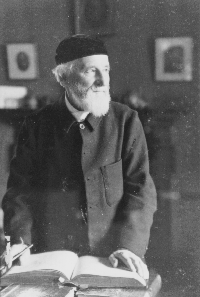
"Plato in his allegory of the soul—in the Phaedrus—though he apparently divides the passions which draw the human chariot into two classes, the heavenward and the earthward—figured by the white horse and the black horse respectively—does not recommend that the black horse should be destroyed or dismissed, but only that he should be kept under due control by the charioteer. By which he seems to intend that there is a power in man which stands above and behind the passions, and under whose control alone the human being can safely move. In fact if the fiercer and so-called more earthly passions were removed, half the driving force would be gone from the chariot of the human soul. Hatred may be devilish at times—but after all the true value of it depends on what you hate, on the use to which the passion is put. Anger, though inhuman at one time is magnificent and divine at another. Obstinacy may be out of place in a drawing-room, but it is the latest virtue on a battlefield when an important position has to be held against the full brunt of the enemy. And Lust, though maniacal and monstrous in its aberrations, cannot in the last resort be separated from its divine companion, Love. To let the more amiable passions have entire sway notoriously does not do: to turn your cheek, too literally, to the smiter, is only to encourage smiting; and when society becomes so altruistic that everybody runs to fetch the coal-scuttle we feel sure that something has gone wrong. The white-washed heroes of our biographies with their many virtues and no faults do not please us. We have an impression that the man without faults is, to say the least, a vague, uninteresting being—a picture without light and shade—and the conventional semi-pious classification of character into good and bad qualities seems both inadequate and false."
React to this quote
More by Edward Carpenter
See allResonant Thoughts
"These men of the cloth sought reflected glory in glorifying the inhumanity of their sinful flock of hostage takers; but in their uncompassionate hearts, could not find the will to spare a moment to ca…"
Explore Further
Related Quotes
"So what I want to know is why it is that I can no longer find you, in my mind. You are still there, just, b…"
— Neil Gaiman"Murder isn’t — it really isn’t — a thing to tamper with lightheartedly."
— Agatha Christie"You've been raised in limitation, but that glove never fit quite right."
— Brandon Boyd"He is equally great whether his theme be religion, patriotism, or love. As a political poet he is one of th…"
— Walther von der Vogelweide"I know paper straws are better for the environment and I’m all for that. But for the love of everything tha…"
— Antonio Fresco"I'd put him in the top three, not just in England but in the world because he's a complete player. Would I …"
— Steven Gerrard