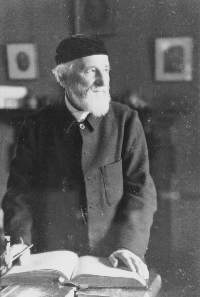
"The slave-holder claims the slave as his Property. The very idea of a slave is, that he belongs to another, that he is bound to live and labor for another, to be another's instrument, and to make another's will his habitual law, however adverse to his own. Another owns him, and, of course, has a right to his time and strength, a right to the fruits of his labor, a right to task him without his consent, and to determine the kind and duration of his toil, a right to confine him to any bounds, a right to extort the required work by stripes, a right, in a word, to use him as a tool, without contract, against his will, and in denial of his right to dispose of himself, or to use his power for his own good. "A slave," says the Louisiana code, "is in the power of the master to whom he belongs. The master may sell him, dispose of his person, his industry, his labor; he can do nothing, possess nothing, nor acquire any thing, but which must belong to his master." "Slaves shall be deemed, taken, reputed, and adjudged," say the South-Carolina laws, "to be chattels personal in the hands of their masters, and possessions to all intents and purposes whatsoever." Such is slavery, a claim to man as property. Now this claim of property in a human being is altogether false, groundless. No such right of man in man can exist. A human being cannot be justly owned. To hold and treat him as property is to inflict a great wrong, to incur the guilt of oppression."

React to this quote
More by William Ellery Channing
See allResonant Thoughts
"It is a very poor thing, whether for nations or individuals, to advance the history of great deeds done in the past as an excuse for doing poorly in the present; but it is an excellent thing to study …"
"As the imperialist countries attained a high degree of wealth and affluence— the result both of scientific and technical progress and of their plunder of the nations of Asia and Africa— these individu…"
Explore Further
Related Quotes
"If you’re aiming not to creep me the hell out, you need more practice."
— Daniel Abraham"Whenever you work on something and try to solve one problem, and you end up helping or solving many other p…"
— Nathan Seiberg"Cicero's works: text, concordances and frequency list"
— Cicero"Javon Ringer works harder than anybody, For the younger backs to see how hard he competes and prepares hims…"
— Javon Ringer"Thunder is good, thunder is impressive; but it is lightning that does the work."
— Mark Twain"Any young girl aspiring to a theatrical career held Florenz Ziegfeld in a awe."
— Irene Dunne