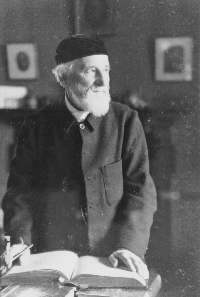
William Ellery Channing
William Ellery Channing was the foremost Unitarian preacher in the United States in the early nineteenth century and, along with Andrews Norton (1786–1853), one of Unitarianism's leading theologians. Channing was known for his articulate and impassioned sermons and public speeches, and as a prominent thinker in the liberal theology of the day. His religion and thought were among the chief influences on the New England Transcendentalists although he never countenanced their views, which he saw as extreme. His espousal of the developing philosophy and theology of Unitarianism was displayed especially in his "Baltimore Sermon" of May 5, 1819, given at the ordination of the theologian and educator Jared Sparks (1789–1866) as the first minister of the newly organized First Independent Church of Baltimore.
Background
- Born in
- Boston
- Educated at
- Boston Latin SchoolRound Hill School
Trending & Selected Quotes
Trending topics shown firstWorks & Publications
No works or publications documented yet.
Timeline
1786
Born
Birth1853
Died
Death
Influenced By
Thinkers whose ideas shaped William's philosophy




Influenced
Thinkers whose work was shaped by William's ideas


Source Attribution
Information about William Ellery Channing is sourced from curated knowledge bases and cross-referenced for accuracy. Influence relationships are scored by thematic overlap and historical plausibility.
Related Thinkers
See all →


Explore Further
Related Quotes
"LifeChurch.tv Official LifeChurch.tv website"
— Craig Groeschel"The nearer you come to God, the less you are disposed to questioning and reasoning. When you actually attai…"
— Ramakrishna"It has been narrated on the authority of Abu Huraira that the Messenger of Allah said: One who died but did…"
— Prophet Muhammad ﷺ"Two Silesius' texts in English translation"
— Angelus Silesius"You must know that if a person, who has attained a certain degree of perfection, wishes to impart to others…"
— Maimonides"Work, the what's-its-name of the thingummy and the thing-um-a-bob of the what d'you-call-it."
— P. G. Wodehouse