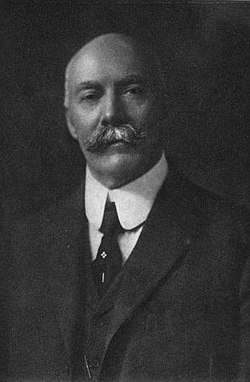
Orison Swett Marden
Dr. Orison Swett Marden (1848–1924) was an American inspirational author who wrote about achieving success in life and founded Success magazine in 1897. His writings discussed principles and virtues which Marden argued would make for a successful life through adoption of the New Thought philosophy.
Background
- Born in
- New Hampshire
- Educated at
- Harvard University
Trending & Selected Quotes
Trending topics shown first"If you have had an unfortunate experience, forget it. If you have made a failure in speech, your song, your book, your article, if you have been placed in an embarrassing position, if you have fallen …"
"The great trouble with all of us who are struggling with unhappy or unfortunate conditions is that we have separated ourselves in some way from the great magnetic center of creation. We are not thinki…"
Works & Publications
No works or publications documented yet.
Timeline
1848
Born
Birth1924
Died
Death
Influenced By
Thinkers whose ideas shaped Orison's philosophy
No known influences documented.
Influenced
Thinkers whose work was shaped by Orison's ideas
No influenced thinkers documented yet.
Source Attribution
Information about Orison Swett Marden is sourced from curated knowledge bases and cross-referenced for accuracy. Influence relationships are scored by thematic overlap and historical plausibility.
Related Thinkers
See all →


Explore Further
Related Quotes
"Vot", asked George I courteously, "is the difference between a public nuisance and a public convenience?"
— S. J. Simon"I think that the best of artists are androgynous in a sense. If a man is a very macho male, I don't know wh…"
— Aparna Sen"Jace was still staring at her as if she'd told him she'd found out one of the Silent Brothers doing nude ca…"
— Cassandra Clare"A talent for friendship" : a review of Stephen Spender: The Authorised Biography by John Sutherland in The …"
— Stephen Spender"Be the trouble you want to see in the world."
— Joey Comeau"I believe that we are lost here in America, but I believe we shall be found. And this belief, which mounts …"
— Thomas Wolfe