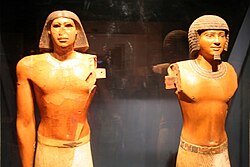
Ptahhotep
Ptahhotep, sometimes referred to as Ptahhotep I or Ptahhotpe, was a vizier during the reign of Djedkare Isesi in Egypt’s Fifth Dynasty. He is best known as the author of The Maxims of Ptahhotep, one of the earliest works of Egyptian wisdom literature, intended to instruct young men in proper conduct and ethical behavior.
Trending & Selected Quotes
Trending topics shown first"Follow your desire as long as you live and do not perform more than is ordered; do not lessen the time of following desire, for the wasting of time is an abomination to the spirit... When riches are g…"
"Do not be arrogant because of your knowledge, but confer with the ignorant man as with the learned. For knowledge has no limits, and none has yet achieved perfection in it. Good speech is more hidden …"
"If you are well-to-do and can maintain your household, love your wife in your home according to good custom...Make her happy while you are alive, for she is land profitable to her lord."
Works & Publications
No works or publications documented yet.
Timeline
-2450
Born
Birth-2400
Died
Death
Influenced By
Thinkers whose ideas shaped Ptahhotep's philosophy
No known influences documented.
Influenced
Thinkers whose work was shaped by Ptahhotep's ideas
No influenced thinkers documented yet.
Source Attribution
Information about Ptahhotep is sourced from curated knowledge bases and cross-referenced for accuracy. Influence relationships are scored by thematic overlap and historical plausibility.
Related Thinkers
See all →


Explore Further
Related Quotes
"I really find listening to and reading the work of lyricists and songwriters as essential to my work as rea…"
— Robbie Coburn"Expel by reasoning the unrestrained grief of a torpid soul."
— Stobaeus"Amazingly, we take for granted that instinct for survival, fear of death, must separate us from the happine…"
— Peter Matthiessen"When one of the surgeons motioned him outside, Jeff was glad to leave. "So long, kid," the sandy-haired man…"
— Harold Keith"The Little Boy’s Bed-Time See under Translations"
— Letitia Elizabeth Landon"2982. It is my own Fault, if I am deceived by the same Man twice."
— Thomas Fuller (writer)





