Angelus Silesius
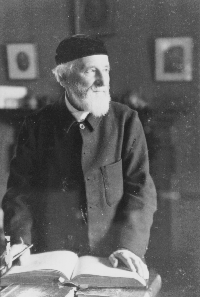
Angelus Silesius, OFM, born Johann Scheffler, was a German Catholic priest, physician, mystic and religious poet. Born and raised a Lutheran, he began to read the works of medieval mystics while studying in the Netherlands and became acquainted with the works of the German mystic Jacob Böhme through Böhme's friend Abraham von Franckenberg. Silesius's display of his mystic beliefs caused tension with Lutheran authorities and led to his eventual conversion to Catholicism in 1653, wherein he adopted the name Angelus and the epithet Silesius ("Silesian").
Career Journey
Background
- Born in
- Wrocław
- Educated at
- Leiden UniversityUniversity of Strasbourg
Trending & Selected Quotes
Trending topics shown first"I know God couldn't live a moment without me; if I should disappear, He would die, destitute"
"Christ could be born a thousand times in Bethlehem – but all in vain until He is born in me."
"Time is eternity and eternity is time, just as long as you yourself don't make them different"
Works & Publications
No works or publications documented yet.
Timeline
1624
Born
Birth1677
Died
Death
Influenced By
Thinkers whose ideas shaped Angelus's philosophy
No known influences documented.
Influenced
Thinkers whose work was shaped by Angelus's ideas
No influenced thinkers documented yet.
Source Attribution
Information about Angelus Silesius is sourced from curated knowledge bases and cross-referenced for accuracy. Influence relationships are scored by thematic overlap and historical plausibility.
Related Thinkers
See all →


Explore Further
Related Quotes
"Compassed about with so great a cloud of witnesses, let us with firm and cheerful trust endure all trials, …"
— William Ellery Channing"For me this world was neither so high nor so low as the Church would have it; chequered over with its wild …"
— James Anthony Froude"As long as the heart of man remains engrossed in recollection of God he is in prayer may he be in the bazaa…"
— Shaqiq al-Balkhi"The Sadr-Sistani Relationship"
— Ali Sistani"Just as it is better to illuminate than merely to shine, so to pass on what one has contemplated is better …"
— Thomas Aquinas"The πξρισσον never merges into the το αυτο . That was the fatal mistake of the false Protestant ethic which…"
— Dietrich Bonhoeffer