#knowledge
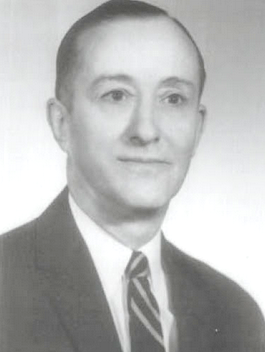
"But what, after all, are the integers? Everyone thinks that he or she knows, for example, what the number three is — until he or she tries to define or explain it."
React to this quote
More by Carl Benjamin Boyer
See allResonant Thoughts
"Let me be known as just the man that told you something you already knew."
— Woody Guthrie
Music1912–1967
Explore Further
Related Quotes
"I know Sir John will go, though he was sure it would rain cats and dogs."
— Jonathan Swift"It's bondage gay website. It's all male and it's a little bit for everybody. You know, we're gonna bring in…"
— Van Darkholme"When we understand that privileged people derive material benefits from the exploitation of oppressed peopl…"
— Peter Gelderloos"I don’t know if you are me or I am neither I nor you."
— Dejan Stojanovic"The procedure we are pursuing is that of true democracy. Semi-democracy accepts the dictatorship of a major…"
— Buckminster Fuller"Their real significance- and I dare say that they are but the smallest, most innocuous example that one can…"
— Arun Shourie
Related Thinkers


Related Topics
Deep Dives
- Leonardo da Vinci on knowledge
- Blaise Pascal on knowledge
- Nicholas of Cusa on knowledge
- Kenneth Arrow on knowledge
- W. Edwards Deming on knowledge
- Charles Babbage on knowledge
- John Wallis on knowledge
- William A. Dembski on knowledge
- Leonardo da Vinci on life
- Leonardo da Vinci on nature
- justice & Beauty
- justice & Change