
Walter Terence Stace
Walter Terence Stace was a British civil servant, educator, public philosopher and epistemologist, who wrote on Hegel, mysticism, and moral relativism. He worked with the Ceylon Civil Service from 1910 to 1932, and from 1932 to 1955 he was employed by Princeton University in the Department of Philosophy. He is most renowned for his work in the philosophy of mysticism, and for books like Mysticism and Philosophy (1960) and Teachings of the Mystics (1960).
Career Journey
Background
- Born in
- London
- Educated at
- Trinity College, DublinFettes College
- Awards
- 🏆 Ralph Waldo Emerson Award
- Doctoral Students
- 📖 John Rawls
Trending & Selected Quotes
Trending topics shown first"But it is not an exaggeration to say that mystical experience is everywhere unitary in the same sense that everywhere aesthetic experience is unitary. British, American, German, Indian, Chinese, Japan…"
Works & Publications
No works or publications documented yet.
Timeline
1886
Born
Birth1967
Died
Death
Influenced By
Thinkers whose ideas shaped Walter's philosophy

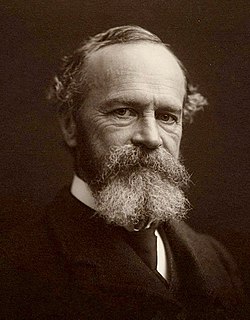
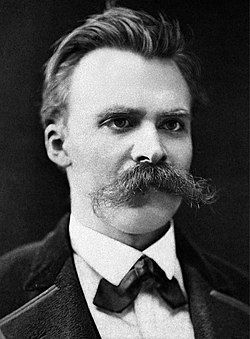


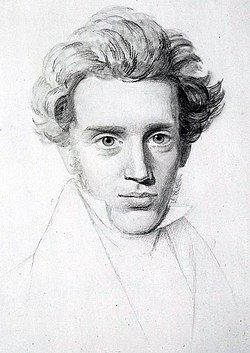
Influenced
Thinkers whose work was shaped by Walter's ideas
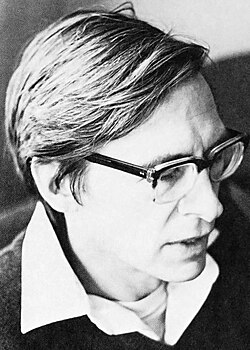


Source Attribution
Information about Walter Terence Stace is sourced from curated knowledge bases and cross-referenced for accuracy. Influence relationships are scored by thematic overlap and historical plausibility.
Related Thinkers
See all →

Explore Further
Related Quotes
"Two Chinamen visiting Europe went to the theatre for the first time. One of them occupied himself with tryi…"
— Arthur Schopenhauer"Aime la vérité, mais pardonne à l'erreur."
— Voltaire"In the world of action, we know that it is disastrous to treat animals or human beings as though they were …"
— Max Horkheimer"can speak its own language only as long as the images are alive which refuse and refute the established order."
— Herbert Marcuse"Did you know that when a guy comes, he comes 200 million sperm? And you're trying to tell me that your chil…"
— Bill Hicks"In the electric age, when our central nervous system is technologically extended to involve us in the whole…"
— Marshall McLuhan



